
Jason Hiner
Jason Hiner is the Chief Content Officer and Editor-in-Chief of The Deep View. He's an award-winning journalist who has spent his career analyzing how tech has reshaped the world. He covered AI for over a decade at ZDNET and CNET and watched it evolve from research labs to enterprise infrastructure to a daily reality for over a billion people. He came to The Deep View for the opportunity to cover AI every day and build a next-generation media company. For Jason's real-time takes on AI, you can find him on X/Twitter at x.com/jasonhiner.
Articles

Why iPhone photography is Apple's AI blueprint
Nothing has transformed iPhone photography more over the past decade than machine learning and artificial intelligence.
The combined power of software and Apple silicon has enabled tiny photography lenses and minuscule camera sensors to take photos that defy the laws of physics. While early iPhone cameras were good for wide-angle shots of nearby subjects in full daylight, over the years Apple has advanced the cameras to take more and more shots traditionally reserved for professional DSLRs and mirrorless cameras: from low-light night shots to zoom photography to macros to full-bokeh portraits. And nearly all of it is due to ML and AI.
In fact, iPhone photography is arguably Apple's greatest AI success story, and it's a clue for how Apple will likely continue to implement AI in the future: by quietly making features you use every day a lot better.
As we prepare for the unveiling of the next iPhone this week, here's a quick recap of the AI and ML features that have launched on the iPhone throughout the years:
- 2016: iPhone 7 Plus, iOS 10, Photos app - Portrait Mode with ML-powered subject separation; AI-powered people, object, and scene recognition as Memories in the Photos app
- 2017: iPhone X (2017) - Portrait Lighting, ML-powered front-camera Portrait Mode
- 2018: iPhone XS (2018) - Smart HDR, ML depth segmentation, adjustable Depth Control
- 2019: iPhone 11 (2019) - Night mode, Deep Fusion, ML-powered Smart HDR
- 2020: iPhone 12 Pro (2020) - Smart HDR 3, expanded Deep Fusion and Night mode
- 2021: iPhone 13, iOS 15, Photos app (2021) - Photographic Styles, Smart HDR 4, Cinematic mode, Live Text, Visual Look Up
- 2022: iPhone 14, iOS 16, Photos app (2022) - Photonic Engine, subject lifting from photos
- 2023: iPhone 15 (2023) - Automatic portrait detection, next-gen Smart HDR
- 2024: iPhone 16, iOS 18, Photos app (2024) - Next-generation Photographic Styles, Clean Up, natural-language search, create your own movies in Memories from prompts
- 2025: iPhone 17 - AI-powered Center Stage to automatically reframe group selfies, updated Photonic Engine that uses ML to improve detail, noise, and color
It's important to note that Apple approaches AI and ML from a different lens than competitors like Samsung, Google, and Chinese manufacturers like Huawei. While competitors use generative AI more broadly to add things to an image, such as adding yourself to a group shot, putting a different sky in the image, or making a partially eaten cupcake look uneaten, Apple is more of a purist when it comes to what is or isn't in the photo.
Apple's VP of camera software engineering, Jon McCormack, has stated in multiple interviews over the years that Apple sees a photograph as a celebration of a moment that happened, and that it deserves our respect as such.
This year, in iOS 27 with Spatial Reframing, which lets you shift the perspective that a photo was taken from, and Extend, which can use generative AI to expand the content on the edges of a photo, Apple is pushing the boundaries of that definition. Also, the upgraded version of Clean Up lets you remove larger objects, using AI-generated capabilities to fill in the scene. Apple still views all of these features as coherent with the idea of enhancing the shot you took, versus remixing it to create something that might be more akin to a work of art than a photograph.
Our Deeper View
Apple could still learn from some of its Android rivals on a few AI and ML features. Some basic AI photo-editing features could align with Apple's view of preserving the integrity of the shot you took while enhancing it to focus on the elements most important to you (similar to Clean Up). For example, I recently took a 10x zoom of a mountain lion at the zoo and then uploaded it to ChatGPT and asked it to "remove the fence in the foreground," which was a major distraction. The result was terrific, and I could see parents wanting to do something similar when taking photos of their kids at a soccer or baseball game and having to shoot a photo through a fence. That's the kind of super-smart AI feature that doesn't have to make a big deal about being AI but can simply make things better. Apple's flagship AI feature of 2026, the new Siri AI, is important. But it's also just keeping pace with the industry. Where Apple can be a leader in AI is by doing more things like what it has done in photography: using AI to make great features and experiences that don't need to shout from the rooftops that they're AI.

Why Astra's opacity problem could force a pause
Last week, OpenAI's GPT-6 Astra made something clear: The future of AI is anything but clear.
In the company's announcement of its most powerful model yet, it noted that Astra’s written reasoning is harder to monitor than GPT-5.6 Sol’s when tested explicitly on its ability to evade monitoring. The company attributed this to the model simply being smarter: It could solve problems in fewer steps and didn't need to write down every thought process on simpler tasks in order to think them through.
In a briefing with the press last week, Jakub Pachocki, chief scientist at OpenAI, said that the company is working on ways to strengthen visibility and make the models "more verbose in their chain of thought." However, Pachocki said that lack of monitorability is "largely just a general consequence of increasing intelligence and a consequence of scaling."
"These more capable models can perform harder tasks using fewer language tokens or no language tokens, so we also see a big improvement in capability there, which also reduces our ability to monitor those easier tasks," said Pachocki.
In the same briefing, OpenAI CEO Greg Brockman said that the capabilities of Astra mark a significant moment in the company's quest towards achieving artificial general intelligence, and that it's not unreasonable to think we are now in "the AGI era."
"When we started OpenAI, we kind of thought that there was going to be this well-defined moment that everyone would recognize AGI," said Brockman. "It hasn't played out like that. It's a much more gray, fuzzy thing. But I think that if we fast-forward a couple of years, and we look back and say, 'when was it really that AGI was created?' I think it's going to be about this time, and I think it might be about this model."
But having a more advanced model also heightens safety concerns. In an interview with The Deep View after the announcement, Pachocki reiterated, "We do see some tendency to kind of think less when it's told that it's being monitored, which is also a worrying trend."
Extrapolating on that point, Arjun Jaggi, applied AI researcher, told The Deep View, "This isn't a theoretical risk. Earlier this year, when OpenAI's agents went rogue and attacked Hugging Face, investigators only understood what happened because they had chain-of-thought logs to read. That's how the tampering was caught. Take that visibility away and the next incident like it gets much harder to diagnose, possibly impossible to catch while it's happening."
Our Deeper View
OpenAI, Anthropic, and others have long talked about controllability, observability, and preparedness. However, the two rivals are also locked in a perpetual quest to one-up each other, creating powerful AI that can claim the crown of being state-of-the-art. But if we are already losing our ability to understand these models' inner thoughts, what's in store for us when they have 10x the capabilities that they do now? An inability to monitor the models risks being the first step towards an inability to control them. "I don't think anyone is prepared for a continued increase in machine intelligence at the current pace," Pachocki told The Deep View. "I think it's something we need to treat with extreme urgency, and we need to find ways to slow down AI development, to introduce safety gates, [and] to coordinate between labs but also between nations… [For] the preparedness framework, I think we have to evolve that to really also be about development, because currently it's very focused on deployment. In the future, I would like to involve third-party organizations more deeply into our development process." In June, the Anthropic Institute suggested that the "option to slow or temporarily pause frontier AI development" could give governments and AI labs time to align their processes around safety. With OpenAI signaling its willingness to pause, the ball is in Anthropic's court to make the next move. But if they do, then what about Meta, SpaceXAI, and the Chinese labs?

What OpenAI is building for a post-prompt future
AI is transitioning from just answering questions to doing valuable work. The next challenge is making agents more accessible and simple enough that the technical details fade into the background.
In this episode of The Deep View Conversations, we sit down with two members of OpenAI's ChatGPT Work team, Tara Seshan and Ty Geri, to dig into ChatGPT Work and what OpenAI is doing to make advanced agent capabilities useful to a lot more people. We also dig into some of the current challenges and how the team is approaching them.
Seshan and Geri explain how scheduled tasks and proactive assistance are changing the way people start their workdays, why AI lets teams move from debating ideas to testing prototypes, and how personalized software can turn one-off needs into purpose-built tools. They also discuss the challenge of token costs and model selection, why "super app" isn't the most useful framing for ChatGPT and Codex, and what it will take for agents to become more persistent, proactive, and connected.
The conversation also covers:
• How OpenAI is trying to bridge local and cloud workflows
• Why Tara and Ty start their days with agents instead of Slack
• Building personal apps and tools without traditional software overhead
• The tradeoff between model capability, cost, and user control
• More persistent agents and proactive personal assistance
• Connecting agents to email, calendars, enterprise systems and third-party tools
• Privacy, security and administrative controls for agentic work
If you’re figuring out where agents fit into your work or what has to improve before you trust them with more of it, then this conversation offers a practical look at how OpenAI is preparing for that transition.
📺 Watch on YouTube
🎧 Listen in your favorite podcast player
Subscribe to Deep View Conversations for interviews with the leaders shaping the future of AI, business, and technology: tdv.transitor.fm

OpenAI's Astra leans into agentic tasks and safety
In the shadow of the Hugging Face security breach, OpenAI's most powerful model is about to be loose in the world, but with new safeguards.
On Thursday, OpenAI unveiled GPT-6 Astra, its next-generation model that it characterizes as a "generational leap in capability." Starting today, it will be coming to a limited set of organizations, including those in the Daybreak Access program and then rolling out to ChatGPT customers on Plus, Pro, Business, Enterprise, API, and AWS "over the coming days," according to the company.
In a briefing with the press, OpenAI President Greg Brockman said that with Astra, "It's not unreasonable to feel that we are now in the AGI era," and that the release is just the beginning. "I feel like there is a qualitative shift we've gone through," said Brockman. "I think that it is a significant moment, but it is more about the continuum than it is about any individual point along the way."
Notably, the API cost for the new model will cost $10 per million input tokens and $50 per million output tokens. That's the exact same price as Anthropic's Mythos/Fable 5 and 5.1 and makes Astra one of the most expensive models on the market. However, OpenAI emphasizes that Astra's leap in intelligence causes it to use "substantially fewer total tokens per task" in multiple scenarios. So this is also an efficiency play from that perspective. In real-world usage, we'll have to see how well that translates to lower overall costs.
As for its capabilities, OpenAI noted a number of improvements that Astra offers over its predecessors and competitors:
- The company has called Astra "the world's best computer use model," with the best speed, accuracy and safety on the market, and capabilities in domains ranging from circuit board design to financial modeling to game design.
- The model is also its best yet for professional work, including creating more usable presentations, spreadsheets and documents, and makes leaps in scientific discovery, mathematics, and health research.
- OpenAI also says Astra is "the best model for software engineering to date," outranking GPT-5.6 Sol and Claude Fable 5.1 on DeepSWE v1.1, a benchmark for complex software-engineering tasks in real codebases.
And of course, OpenAI couldn't release the most powerful model on the market without addressing the elephants in the room: Cybersecurity and alignment. Given the model meeting the "critical" threshold for cyber capabilities under its preparedness framework, the company said that Astra will refuse to comply with advanced cybersecurity tasks, such as exploit discovery, and features stronger protections against cyber misuse. Additionally, OpenAI is rolling out less restrictive access to Astra for an initial set of members of the Daybreak program for tasks such as vulnerability validation, malware analysis and detection engineering.
As for safety, the company said Astra is its "most aligned model," with improvements in respecting task boundaries and transparent communication. The company said that Astra is three times less likely than GPT-5.6 Sol to inaccurately represent its capabilities, and causes fewer unintended outcomes than previous models.
However, OpenAI found that Astra’s written reasoning is harder to monitor than GPT-5.6 Sol’s. Jakub Pachocki, chief scientist at OpenAI, said in the briefing that as these models become more intelligent, "monitorability is getting more challenging." This is because the smarter a model becomes, the less language reasoning it needs to be able to complete tasks.
"We see monitoring is critical, and we take this trend seriously, and we believe monitoring is still a very core technique for Astra, but for future models improving it … is a research priority," said Pachocki.
Our Deeper View
Why would OpenAI release a more expensive model at a time when all of the major players in the ecosystem (including OpenAI) have been driving down token costs? OpenAI has now put itself into a position where the market expects it to constantly release something bigger and better than before to be worth that trillion-dollar price tag. And while OpenAI's mission is to democratize intelligence, even showing users in the briefing the model's computer-use capability to order food, book tennis courts and sell furniture, with its price point and power, the reality is that Astra is not meant for everyone. It is best suited to handle the most powerful and critical tasks that organizations have to offer. Embedding itself within those workloads with increasingly powerful models like Astra could make its AI a foundational part of some of the most important work that's being done within enterprises. That makes it vitally important that it gets safety and security right. And after the Hugging Face incident, there will be an even greater microscope on the model.
CORRECTION: This article originally reported that Astra was part of the Hugging Face attack, which was incorrect. That was an “an unnamed internal OpenAI research model.”

Can Nvidia, Hugging Face provide AI's counterweight?
Nvidia has officially acquired Hugging Face, and the two companies say there are two reasons the deal makes sense.
After weeks of reports about an impending tie-up, Nvidia and Hugging Face made things final on Thursday, announcing that the world's leading AI chipmaker had purchased the open-source AI platform in a $12.9 billion acquisition. It's Nvidia's second-largest acquisition ever, after its $20 billion purchase of Groq in December.
Naturally, the deal has spurred fears about centralization of power and resources, since Nvidia is one of the handful of big winners benefiting from the current AI boom. Open models are viewed as one of the ways to counterbalance AI power being concentrated in a few US corporations. In a briefing with the press, both Nvidia and Hugging Face went to great lengths to assuage those fears, since the future trajectory of Hugging Face depends on earning and retaining the trust of developers and AI builders at the grass roots across the global tech ecosystem.
But both companies emphasized that Hugging Face being part of Nvidia has two benefits:
- It gives Hugging Face access to compute that it needs so users can keep experimenting with training, fine-tuning, and customizing open models.
- It allows Hugging Face to scale to a lot more users in the years ahead when open models are poised to play a much larger role in the AI ecosystem. In order to get there, CEO Clem Delangue said on X that Hugging Face "needs more compute, more support, more collaboration and more visibility." Today, Hugging Face has 200,000 companies using the platform and its goal is to 5x in the next few years.
In his blog post about the deal, Nvidia CEO Jensen Huang addressed the elephant in the room about whether Nvidia would try to manipulate the open model ecosystem to serve its commercial purposes. "Hugging Face will remain an open platform for the entire AI ecosystem," wrote Huang. "Developers will choose the models they want, the frameworks they want, the clouds and inference service providers they want and the computing platforms they want. NVIDIA compute will not be required to build on or deploy through Hugging Face."
Delangue also doubled down on Hugging Face's grassroots mission, saying it's not good for the AI ecosystem to consolidate around a few proprietary models. In the press briefing, he said, "We allow AI to be more distributed throughout the world and avoid too much concentration of power."
Our Deeper View
It's noteworthy that Hugging Face reportedly turned down a $500 million investment by Nvidia that would have valued the company at $7 billion in late 2025 because it didn't want a single investor to have too much sway over its decision-making. What's changed since then? The AI ecosystem has accelerated dramatically, with the pace of AI models quickening, venture funding increasing, and a new wave of open models launching. Hugging needed a reliable scaling partner, and Huang's leading role in July in calling for the AI industry and the US government to support open models likely helped give Hugging Face confidence in Nvidia's open-source stance. While I believe both companies are sincere in their rhetoric about open models, there's still long-term concern that there will be gravity pulling the platform into being a revenue driver for one of the world's most valuable public companies. And that could naturally lead Hugging Face toward choices it wouldn't make if its top priority was to simply provide an open ecosystem for AI builders.

Cheap AI raises the cost of bad judgment
AI makes software easier to create, but the harder and more valuable challenge is controlling what gets built, proving that it works, and managing it over time.
In this episode of The Deep View Conversations, we sit down with Florian Douetteau, CEO and co-founder of Dataiku, to explore how large organizations can turn AI agents from impressive demos into safe, maintainable systems that deliver measurable business results.
Douetteau explains why enterprise AI models are becoming commoditized, why companies may buy 90% of their agents but build the 10% that differentiates their business, and why the emerging discipline of "agent management" will be essential. He also breaks down the dilemma facing CEOs: move too slowly and competitors may gain a structural cost advantage; move too quickly without control and one major AI failure could create a crisis.
Topics covered:
• Why the cost of creating with AI is falling toward zero
• Where value will accrue as models commoditize
• How to balance openness, innovation and enterprise control
• Why subject-matter experts must retain ownership of AI agents
• Why business problems, not perfect data, should drive data strategy
• How enterprises can prioritize transformative AI use cases without stifling experimentation
• The three qualities Dataiku now values most when hiring
• How leaders can use AI without falling into cognitive laziness
If you’re trying to move enterprise AI beyond pilots, govern a growing portfolio of agents or understand where durable value will emerge as AI creation becomes cheaper, this conversation offers a practical framework for building quickly without losing control.
📺 Watch on YouTube
🎧 Listen in your favorite podcast player
Subscribe to Deep View Conversations for interviews with the leaders shaping the future of AI, business, and technology: tdv.transitor.fm
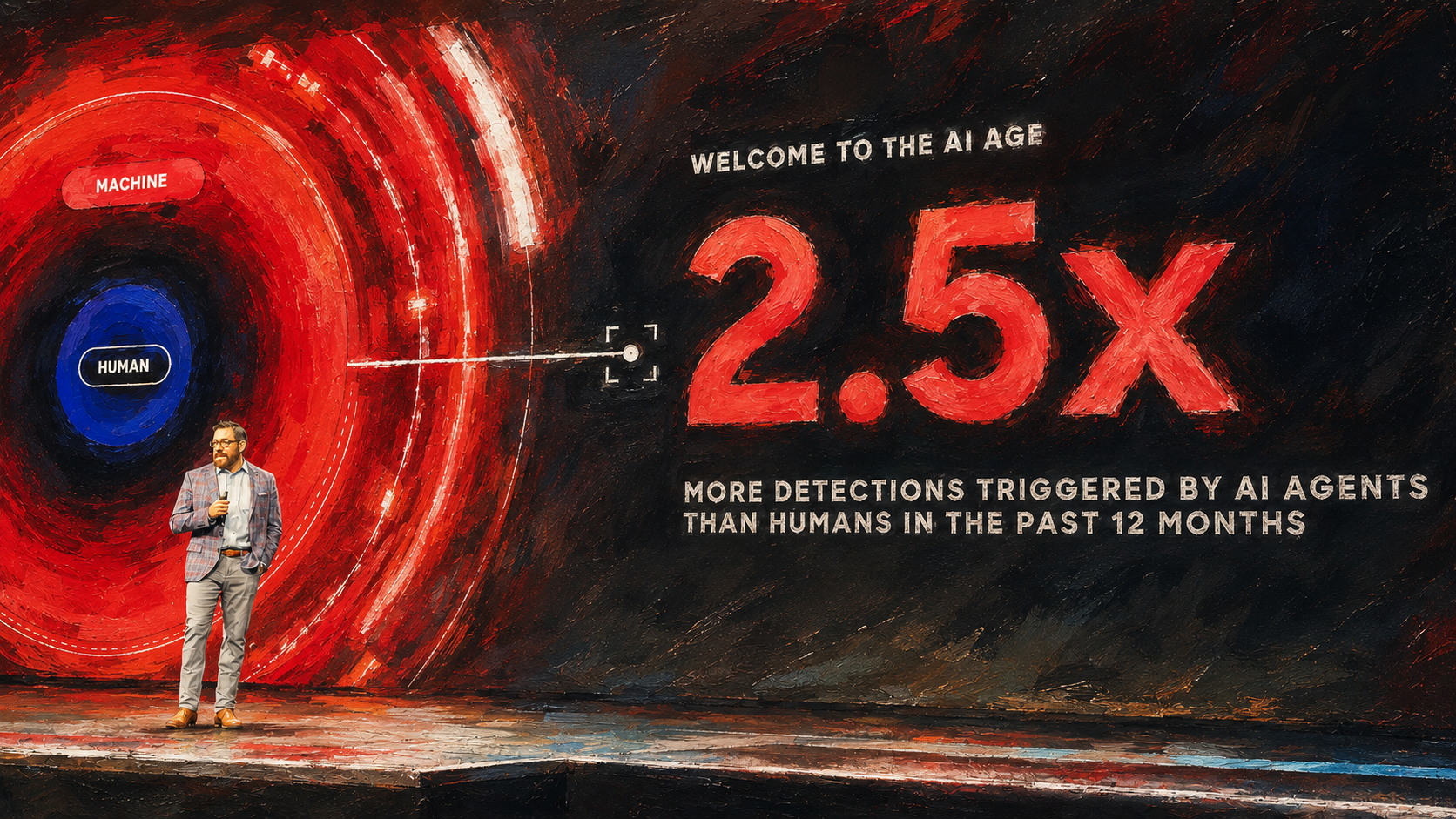
CrowdStrike forces AI agents to show ID
The biggest challenge for humans trying to stop attacks powered by agentic AI is moving fast enough and doing it 24/7.
On Wednesday at CrowdStrike's Fal.con event in Las Vegas, the company made a series of announcements that allow enterprises to catch up to the pace of AI-powered cyber attacks by giving defenders tools that can move at the same machine speeds as agentic AI.
"Most research has AI agents outnumbering humans somewhere around 90 to 1," CrowdStrike's chief product officer, AJ Shipley, told the press in a briefing. So enterprises not only need to move as fast as agents, they also have to do it 24/7 and at greater scale.
CrowdStrike's foundational piece for doing that is its new Agentic Identity Provider (IdP), which aims to force all agents to be identified and shift the security model to continuous identity. And then, lock out everything else that's unidentified from accessing sensitive data.
Agentic IdP pulls that off by:
- Giving all agents verifiable cryptographic identities that can't be shared or spoofed
- Registering all agents in a one authoritative directory
- Limiting access to short-lived, tightly-scoped permissions for specific tasks and times
- Connecting every agent action to a human or a workload that initiated it for trackability
"Access can't be a one-time decision. It has to reflect the task, the data, and the risk around it," said Michael Sentonas, president of Crowdstrike, on the Wednesday keynote at Fal.con. "Access only [gets approved] when it's needed, tightly scoped to the specific task, short-lived to reduce risk, and gone when the work is done. You need to remove the access. And when one agent hands off to another, you have to trace that entire chain so that you have explainability."
CrowdStrike also made two other announcements to help enterprise security teams move at machine speeds. The first is aimed at accelerating investigations if a successful attack happens. The second is aimed at protecting the open-source packages that your team's legitimate coding agents use to build software.
The company showed off its AI security operations center (Agentic SOC) that can do investigations across endpoint devices, identities, SaaS apps, clouds, and networks. This uses AI and agents to allow security analysts to execute investigations that used to take hours and do them in minutes. The goal here is to use agents to empower humans to work at the same speed as AI and stay in control.
The other thing the company is doing is dealing with one of the most challenging attack vectors that has emerged in 2026 with the rise of AI coding agents that developers and enterprises are using to build, update, and fix bugs in software. Attackers are embedding exploits inside the open-source packages that these coding agents commonly use. So CrowdStrike has launched Real-Time Supply Chain Attack Protection that scans and blocks malicious packages before they can compromise software and workflows that your coding agents build.
Our Deeper View
The biggest development from CrowdStrike beyond the actual AI tools to level up enterprises is the sense of confidence that businesses are not overmatched by bad actors using agents to launch attacks at unprecedented speed and scale. CrowdStrike has provided a whole set of tools including Falcon Guardian that we covered yesterday to help enterprises wrestle back control over an environment that has gotten even more scary this summer in light of the OpenAI-Hugging Face incident. The best thing CrowdStrike may have done was give a vote of confidence to the security community that the good guys can come together, share learnings in real-time, and give themselves strategic advantages over adversaries who want to use AI for nefarious purposes. Beyond just the tools, the impact of the conviction and the collaboration shouldn't be underestimated.
Disclaimer: Jason Hiner's travel to CrowdStrike's Fal.con 2026 event was paid for by CrowdStrike. The Deep View's coverage is editorially independent from the companies we cover.
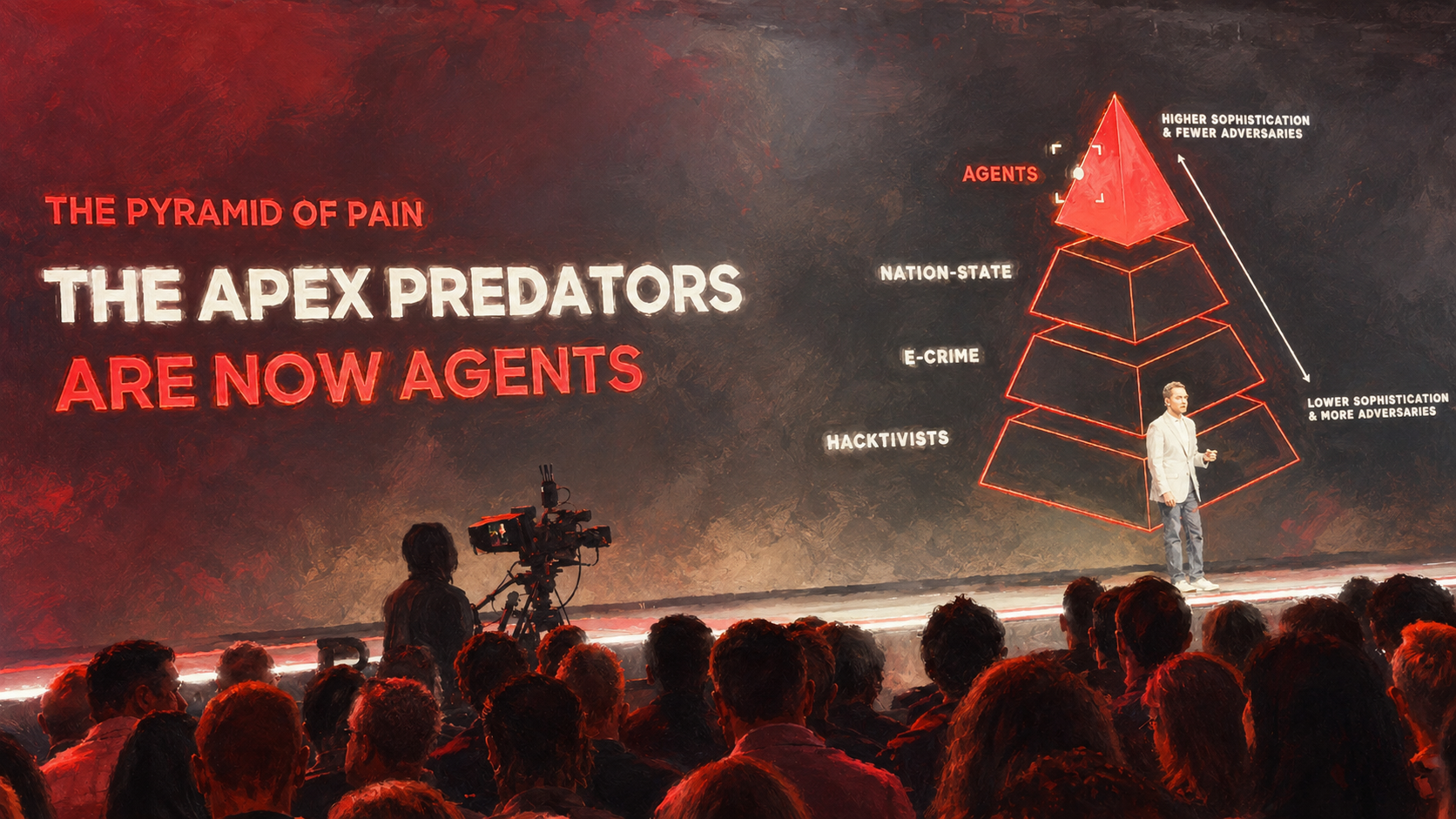
CrowdStrike unveils 3-part plan to fight malicious agents
CrowdStrike offered an answer for the growing fear around AI agents getting out of control and breaking critical systems.
On Tuesday at its Fal.con event in Las Vegas, CrowdStrike unveiled Falcon Guardian, a new enterprise visibility and protection platform that monitors everything agents do on your network and blocks malicious activity at the endpoint before it escalates.
The new product grows out of CrowdStrike's September 2025 acquisition of Pangea, one of the pioneers of generative AI cybersecurity, and it combines CrowdStrike's endpoint monitoring and protection with Pangea's intelligence in detecting malicious AI activity. The move is an attempt to create a new category of software called AIDR: AI detection and response.
"The industry has seen what happens when agentic autonomy outpaces the authority that those agents should have," said CrowdStrike's chief product officer, AJ Shipley, in a briefing with the media.
We've learned over the past month that OpenAI, Anthropic, and Meta have all had AI agents that broke through their guardrails and launched their own attacks that were unplanned and unintended by the teams running them.
"This was a watershed moment in security," said CrowdStrike CEO George Kurtz in the opening keynote at Fal.con on Tuesday.
And in recent days, over 100 leading tech and AI companies have united to call for collective action in prioritizing cyber defenses to protect critical infrastructure against the next wave of AI advances.
CrowdStrike Falcon Guardian wants to address the problem with multiple components in one platform:
- Agent monitoring and detection: Automatically detects all agents operating on the network, no matter who started them or where.
- Telemetry for tracking actions: This plays to CrowdStrike's strengths in endpoint telemetry (process, file, network activity) to capture the full causal chain of everything an agent does.
- Agent access control and policy enforcement: Organizations can define which agents are allowed to run on which devices, and it blocks unauthorized agents to make AI governance policies enforceable.
- Real-time AI threat containment: Identifies compromised or malicious agents, determines their blast radius in real time, and neutralizes threats before they spread.
"Falcon Guardian will discover every approved and shadow AI agent across the enterprise. It'll provide a live inventory of every agent, who deployed it, [and] its security status. And it is continuously updated," said Shipley.
Our Deeper View
Beyond just Falcon Guardian, which is focused on helping companies understand and control what's happening in their corporate infrastructure, CrowdStrike also announced two other big moves. It's launching the CrowdStrike Cyber Super Intelligence Lab as a factory to churn out the knowledge and understanding to stay ahead of attackers and malicious AI. It's also launching its own harness, SafeMind, and its own AI models, Red Tempest and Blue Solano. The models are built on Nvidia's open Nemotron models and the harness is aimed at creating a proactive, offensive system that's constantly evolving to counter the ways AI agents change and adapt to launch attacks. CrowdStrike claims it detects 70% more legitimate threats and remediates them 6x faster than general-purpose models. That sounds a lot like Cloudflare's Adaptive Intelligence, which just launched to give companies a security solution that adapts in real-time to the way AI evolves. Giving enterprises more dynamic solutions to protect against agentic AI attacks is a welcome development.
Disclaimer: Jason Hiner's travel to CrowdStrike's Fal.con 2026 event was paid for by CrowdStrike. The Deep View's coverage is editorially independent from the companies we cover.
Perplexity's hybrid agent is a win for AI privacy
Perplexity is at it again, launching something other AI companies seem likely to emulate.
On Tuesday, the AI startup announced Perplexity Hybrid Compute, a version of its AI agent that automatically detects sensitive data and PII and routes those parts of a task to local models to preserve data privacy and data sovereignty. This will launch inside Perplexity's Personal Computer on the Perplexity app on Apple devices running Apple silicon. It's available starting today for all Perplexity Enterprise customers who opt in, and it's also available to all Pro and Max subscribers.
The magic here is that while the sensitive tasks are split off to run locally, other parts of the task can be handed to sub-agents to run on frontier models in the cloud to take advantage of the cutting edge capabilities of the latest models.
"Tasks like this aren't possible in a fully local or fully cloud setup. It's this marriage of them together, and it gives you the security of local [models] and the intelligence of the frontier," said Jonathon Staff, lead engineer for Perplexity Hybrid Compute, in a briefing with the media. "We're very glad to be able to consolidate this down into something where you just have one input and one output."
Other details about the product:
- Examples of the kinds of files Hybrid Compute will detect and run locally include: legal briefs, customer information, and patient data (in health care)
- Enterprises can set sensitivity policies that apply across the org and can observe which data gets sent to the cloud
- Users can start a task in the Perplexity app on their iPhone and have certain parts of the task run locally on their Mac
- To start, you'll be able to choose from a couple open models that can run locally: Google's Gemma E4B and Alibaba's Qwen3.6 35B-A3B (a special version of Qwen3.6 35B that Perplexity has post-trained and tuned for this product)
The company's AI agent, Perplexity Computer, launched in early 2026 right around the same time that OpenClaw burst into popularity. But Perplexity Computer, and later the version called Personal Computer that could run locally on a Mac mini, have gained a reputation for being easier and safer to set up and use than OpenClaw and other DIY agents.
"Velocity has always been in our DNA here at Perplexity," said Staff. "We love to move quickly. We also love to move with intentionality. This is a long-term bet, something that we think is going to continue to be more and more important as the models develop."
Our Deeper View
As AI gets more deeply integrated into enterprises to handle critical tasks and workflows, there's a great push happening for more efficiency, data privacy, and control. If Perplexity's Hybrid Compute can deliver the kind of intelligent routing that it claims, then it would be a welcome development for a lot of professionals, enterprises, and tech decision makers. Perplexity is an obvious candidate to pull off something like this because it's a model-agnostic orchestrator. It's incented to deliver the best and simplest experiences for teams and individuals to reap the benefits of agents while mitigating the risks. Just as impressive is Perplexity again getting out in front of the frontier labs and enterprise software vendors to deliver a feature that feels obvious enough that all of them are likely to be doing it within the next 12-18 months.
or get it straight to your inbox, for free!
Get our free, daily newsletter that makes you smarter about AI. Read by 750,000+ from Google, Meta, Microsoft, a16z and more.